
Shockwave Therapy (ESWT) — Non-Invasive Pain Relief & Tissue Regeneration at Fountain of Eden
Shockwave therapy — also known as Extracorporeal Shockwave Therapy (ESWT) — is a non-invasive treatment that delivers focused acoustic energy waves to damaged musculoskeletal tissues. These waves stimulate tissue regeneration, new blood vessel formation, and natural pain relief without surgery, injections, or medication. At Fountain of Eden, Dr. Michele West-Harvey, MD, MPH, QIA, ABP-CP uses shockwave therapy to treat conditions including plantar fasciitis, tennis elbow, shoulder calcification, knee osteoarthritis, and chronic tendon pain.
Key Takeaways
ESWT uses acoustic pressure waves to stimulate healing in damaged tendons, joints, and soft tissues
The treatment is completely non-invasive — no needles, no incisions, no anesthesia required
Shockwave therapy promotes neovascularization (new blood vessel growth), collagen remodeling, and tissue repair
Commonly treated conditions include plantar fasciitis, tennis elbow, shoulder calcification, knee osteoarthritis , and chronic tendinopathy
Most patients require 3–6 sessions spaced one week apart
Treatment sessions typically take 15–20 minutes per area
Shockwave therapy pairs powerfully with PRP and stem cell therapy for enhanced joint healing
What Is Shockwave Therapy?
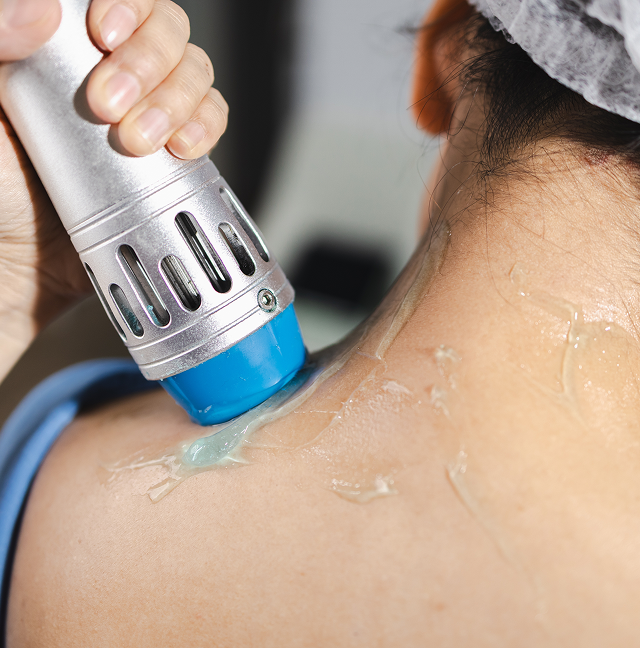
Extracorporeal Shockwave Therapy (ESWT) is a medical treatment that uses high-energy acoustic pressure waves — similar in nature to sound waves — to stimulate healing in injured or degenerated musculoskeletal tissues. The term “extracorporeal” simply means the waves are generated outside the body and delivered through the skin to the targeted area.
Originally developed to break up kidney stones (lithotripsy), shockwave technology has evolved significantly and is now widely used in orthopedic and sports medicine for treating chronic pain, tendon injuries, and degenerative joint conditions.
Shockwave therapy is not electrical stimulation. The “shock” refers to the acoustic pressure wave — a controlled pulse of mechanical energy that penetrates tissue and triggers biological healing responses at the cellular level.
How Does ESWT Work?
Shockwave therapy works through several interconnected biological mechanisms:
Mechanotransduction
The acoustic waves create mechanical stress at the cellular level, which triggers cells to activate repair and regeneration pathways. This process — called mechanotransduction — is how your body converts physical force into biological response.
Neovascularization
One of the most significant effects of ESWT is the stimulation of new blood vessel formation (neovascularization) in the treated area. Chronic tendon injuries and degenerative conditions often suffer from poor blood supply, which impairs natural healing. By promoting new blood vessel growth, shockwave therapy restores nutrient and oxygen delivery to damaged tissues.
Collagen Remodeling
Shockwave energy stimulates the production of new collagen fibers — the structural protein that forms the backbone of tendons, ligaments, and cartilage. More importantly, it promotes the organization of collagen into a stronger, more functional alignment, replacing the disorganized scar tissue that characterizes chronic injuries.
Pain Reduction
ESWT may reduce pain through multiple pathways:
– Substance P depletion — Reducing the neurotransmitter responsible for transmitting pain signals
– Gate control mechanism — Intense sensory stimulation that modulates pain perception
– Inflammation resolution — Triggering a controlled inflammatory response that transitions to the healing phase
– Nerve fiber desensitization — Reducing hypersensitivity in chronically painful areas
Dissolution of Calcifications
In conditions involving calcium deposits (such as calcific tendonitis of the shoulder), shockwave energy can help break up and dissolve these deposits, restoring normal tissue function.
What Conditions Does Shockwave Therapy Treat?
ESWT has been extensively studied and shown promise for a range of musculoskeletal conditions:
Plantar Fasciitis
One of the most well-established applications of shockwave therapy. ESWT may help:
– Reduce chronic heel pain resistant to conservative treatments
– Promote healing of the inflamed plantar fascia
– Dissolve heel spurs that contribute to pain – Provide lasting relief when stretching, orthotics, and physical therapy have fallen short
Tennis Elbow (Lateral Epicondylitis)
Chronic tennis elbow involves degeneration of the tendon at the outer elbow. Shockwave therapy may:
– Stimulate tendon repair at the point of degeneration
– Increase blood flow to the chronically under-perfused tendon
– Reduce pain and restore grip strength
– Offer a non-surgical alternative for persistent cases
Shoulder Calcification (Calcific Tendonitis)
Calcium deposits in the rotator cuff tendons cause significant pain and restricted movement. ESWT may:
– Break up and dissolve calcium deposits
– Reduce inflammation and pain in the shoulder
– Restore range of motion and function
– Avoid the need for surgical intervention in many cases
Knee Osteoarthritis
For patients with knee OA, shockwave therapy may provide:
– Pain relief through multiple mechanisms
– Stimulation of cartilage-protective factors
– Improved blood flow to periarticular tissues
– Enhanced outcomes when combined with PRP therapy or stem cell therapy
Additional Conditions Treated
- Achilles tendinopathy — Chronic Achilles tendon pain and degeneration
- Patellar tendinopathy (Jumper’s knee) — Tendon degeneration below the kneecap
- Hip bursitis (trochanteric pain syndrome) — Chronic hip pain from bursa inflammation
- Shin splints (medial tibial stress syndrome) — Chronic lower leg pain
- Myofascial trigger points — Chronic muscle pain and tightness
- Non-union fractures — Fractures that have failed to heal normally
What to Expect During Shockwave Therapy
Before Your Session
- Consultation with Dr. West-Harvey to confirm your diagnosis and determine if ESWT is appropriate
- The treatment area is identified through physical examination and review of imaging if available
- No special preparation is required — wear comfortable clothing that allows access to the treatment area
During Your Session
- Positioning: You’ll be comfortably positioned to expose the treatment area
- Gel application: A coupling gel is applied to your skin (similar to ultrasound gel) to ensure efficient wave transmission
- Treatment delivery: The shockwave handpiece is placed against your skin and delivers controlled pulses of acoustic energy to the targeted area
- Duration: Each treatment area typically requires 15–20 minutes
- Communication:West-Harvey’s team adjusts the intensity based on your feedback to ensure effectiveness while maintaining comfort
After Your Session
- You may experience mild soreness or redness in the treated area for 24–48 hours — this is a normal part of the therapeutic inflammatory response
- Avoid anti-inflammatory medications (NSAIDs like ibuprofen) for 48–72 hours after treatment, as they may interfere with the healing response ESWT initiates
- You can typically resume normal activities immediately, though high-impact exercise in the treated area should be avoided for 48 hours
- Ice may be applied if soreness is bothersome, though some mild inflammation is part of the healing process

Pain Level During Treatment
One of the most common questions: Does shockwave therapy hurt?
Most patients describe the sensation as a rapid tapping or pulsing feeling against the skin. Intensity can range from:
Intensity Level | Patient Experience |
Low | Mild tapping sensation — very comfortable |
Medium | Firm pulsing — noticeable but tolerable for most |
High | Intense pulsing — may cause brief discomfort in very sensitive areas |
Key points about comfort:
– Intensity is adjustable throughout the session based on your tolerance
– The most intense sensations often occur directly over the point of injury — this is actually a diagnostic indicator and a sign the treatment is targeting the right area
– Discomfort typically decreases as the area responds to treatment across sessions
– No anesthesia is required, and most patients tolerate the treatment well
– Any discomfort during treatment is temporary and resolves quickly after the session
How Many Shockwave Therapy Sessions Will I Need?
Most treatment protocols involve:
Condition | Typical Sessions | Frequency | Expected Response Timeline |
Plantar Fasciitis | 3–5 sessions | Weekly | Improvement often begins after 2–3 sessions |
Tennis Elbow | 3–5 sessions | Weekly | Progressive improvement over 4–8 weeks |
Shoulder Calcification | 3–6 sessions | Weekly | Calcification dissolution may take 4–12 weeks |
Knee Osteoarthritis | 3–5 sessions | Weekly | Pain relief developing over 2–6 weeks |
Achilles Tendinopathy | 3–6 sessions | Weekly | Gradual improvement over 6–12 weeks |
Important: The healing process continues for weeks to months after your final session. Shockwave therapy initiates biological cascades (new blood vessel growth, collagen remodeling) that take time to fully develop. Many patients experience continued improvement 3–6 months after completing treatment.
Shockwave Therapy Combined With Regenerative Medicine
One of the most powerful aspects of shockwave therapy at Fountain of Eden is its ability to synergize with other regenerative treatments:
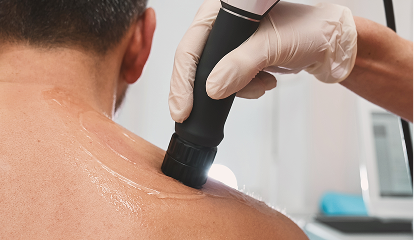
ESWT + PRP Therapy
Shockwave therapy increases blood flow and creates a localized healing response, which may enhance the effectiveness of PRP injections by preparing the tissue environment for growth factor delivery.
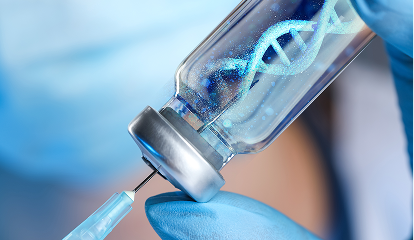
ESWT + Stem Cell Therapy
By promoting neovascularization and activating cellular repair pathways, shockwave therapy may help create a more receptive tissue environment for stem cell engraftment and function.
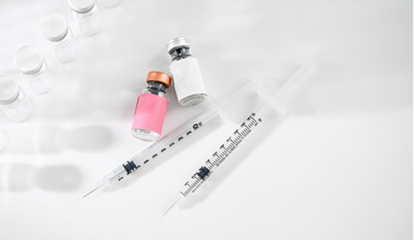
ESWT + Peptide Therapy
Therapeutic peptides support tissue repair through complementary mechanisms. When combined with the mechanical stimulation of ESWT, the result may be a more comprehensive, multi-pathway healing response.

Why Choose Shockwave Therapy at Fountain of Eden?
- Physician-supervised — Every treatment is overseen by Dr. Michele West-Harvey
- Integrated approach — ESWT is part of a comprehensive regenerative strategy, not a standalone modality
- Evidence-informed protocols — Treatment parameters are based on the best available clinical evidence
- Personalized care — Intensity, frequency, and treatment combinations are tailored to your specific condition
- Complementary regenerative options — Seamless integration with stem cells, PRP, exosomes, and peptides
- No surgery, no drugs — A completely non-invasive approach to pain relief and tissue healing
Related Treatment Packages
Shockwave therapy is a key component of select comprehensive packages at Fountain of Eden:
Frequently Asked Questions About Shockwave Therapy
What does shockwave therapy feel like?
Most patients describe shockwave therapy as a rapid tapping or pulsing sensation against the skin. The intensity is adjustable based on your comfort level. You may feel more intensity directly over the injured area, which typically indicates the treatment is targeting the right location. Any discomfort during the session is temporary and manageable.
Is shockwave therapy painful?
Shockwave therapy involves varying degrees of sensation depending on the intensity level and the sensitivity of the treatment area. Most patients find it tolerable and manageable. The practitioner adjusts the intensity based on your real-time feedback, and no anesthesia is needed. Post-treatment soreness is typically mild and resolves within 24–48 hours.
How quickly will I feel results from shockwave therapy?
Some patients notice initial improvement after 2–3 sessions, while the full biological effects continue developing for weeks to months after completing treatment. Conditions like plantar fasciitis may respond more quickly, while tendon degeneration and calcific conditions may take longer. Patience is important — shockwave therapy initiates healing processes that unfold over time.
Are there any side effects of shockwave therapy?
Side effects are generally mild and temporary. The most common include localized redness, mild swelling, minor bruising, and temporary soreness in the treated area. These are typically signs that the therapy is stimulating the desired healing response. Serious side effects are rare when ESWT is performed by qualified professionals.
Can shockwave therapy replace surgery?
For many patients with chronic tendon conditions, plantar fasciitis, and shoulder calcification, shockwave therapy has been shown to provide meaningful relief that may delay or eliminate the need for surgery. However, ESWT is not appropriate for all conditions, and Dr. West-Harvey will provide an honest assessment of whether it’s likely to benefit your specific situation.
Why should I avoid anti-inflammatory medications after shockwave therapy?
Shockwave therapy works in part by triggering a controlled inflammatory response that initiates healing. Anti-inflammatory medications (NSAIDs like ibuprofen) can interfere with this process. Dr. West-Harvey will advise you on pain management alternatives for the 48–72 hours following each session. Acetaminophen (Tylenol) is generally acceptable if needed.
Can I exercise after shockwave therapy?
You can typically resume light to moderate activities immediately. However, it’s recommended to avoid high-impact exercise or intense loading of the treated area for 48 hours after each session. This allows the healing processes initiated by the shockwave treatment to begin without disruption. Dr. West-Harvey will provide specific activity guidance based on your condition.
How does shockwave therapy compare to cortisone injections?
Cortisone injections provide short-term pain relief by suppressing inflammation but do not promote tissue healing — and repeated cortisone injections may actually weaken tendons over time. Shockwave therapy takes a fundamentally different approach: it stimulates the body’s natural repair mechanisms for longer-lasting results. Many patients turn to ESWT after cortisone injections have provided only temporary relief.
Activate Your Body’s Natural Repair Response
Shockwave therapy is regenerative medicine in its most elegant form — using the physics of acoustic energy to awaken your body’s built-in healing pathways. At Fountain of Eden, ESWT is seamlessly integrated with our full suite of regenerative treatments to help you move past chronic pain and toward lasting restoration.
Dr. Michele West-Harvey, MD, MPH, QIA, ABP-CP is ready to evaluate whether shockwave therapy can help you reclaim comfort, mobility, and quality of life.
Fountain of Eden Wellness — Where Science Meets Restoration
Disclaimer: Shockwave therapy results vary by individual and condition. The information on this page is for educational purposes and does not constitute medical advice. All treatments are administered under physician supervision. Please consult with Dr. West-Harvey to determine if shockwave therapy is appropriate for your specific condition.